
DIY Radiator Bleeding: How to Bleed a Radiator
It’s getting to that time of year when temperatures drop, and you start to reach for the thermostat. But there’s nothing worse than turning on the heating only to find your radiators aren’t providing enough warmth.
If your radiators are not working like they should be you may need to bleed them. But fear not! Bleeding a radiator is an easy and quick DIY task you don’t need to pay a plumber for; it also doesn’t require many tools or experience. Simply follow the step-by-step guide below to get your radiators working efficiently again.
Table of contents:
- Why bleed radiators?
- When to bleed radiators
- How to bleed radiators
- What order to bleed radiators
- How often should you bleed radiators?
- What if bleeding the radiators doesn’t work?
Why bleed radiators?
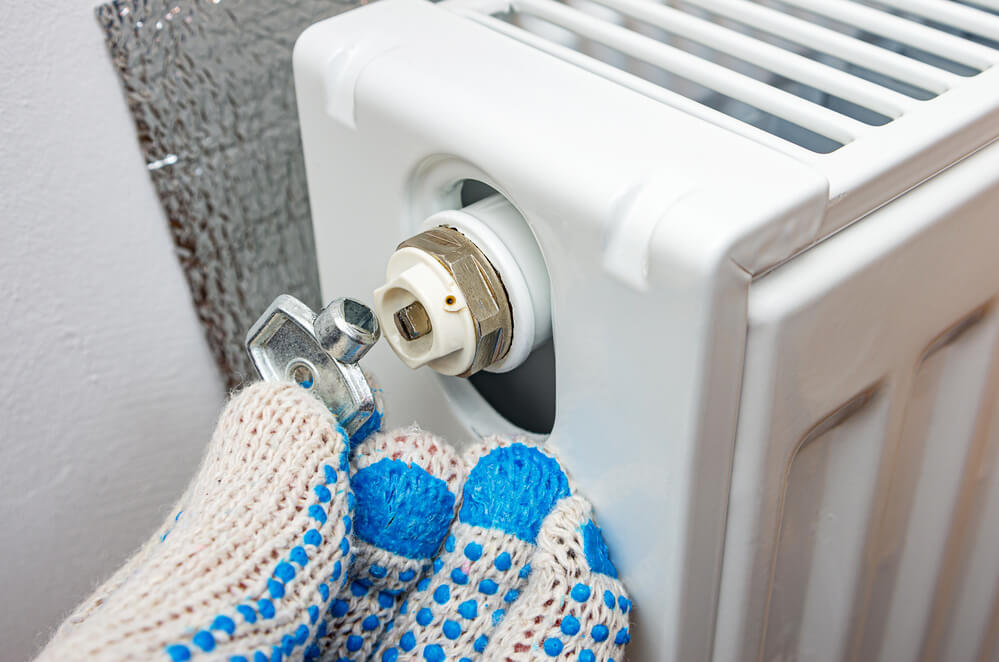
If you’ve never bled your radiators before, you may not know why you need to. You need to bleed them mainly because air gets trapped inside. Unlike water, air doesn’t heat effectively in your heating system, leading to cold spots on your radiators and inefficient heating.
Bleeding your radiators removes the trapped air so that your radiators can heat your rooms at their maximum efficiency.
It’s worth noting that bleeding radiators is not the same as flushing the system. Flushing your heating system means flushing out all the water, whereas bleeding the radiators lets out trapped air.
When to bleed radiators
You should bleed your radiators if there is trapped air in them. As air rises, cold spots will appear at the top of your radiator when you turn the heating on.
You might also want to bleed them if they take an unusually long time to heat or you can hear a gurgling noise. A gurgling sound is the trapped air being pushed around the system.
If you’re unsure whether it’s time to bleed your radiators, test the one furthest away from your boiler; if air comes out before water, you might want to check and bleed the rest.
How to bleed radiators
Bleeding radiators can seem daunting if you’ve never done it before, but it’s one of the easiest DIY maintenance tasks in the home that you can easily do without experience. Simply follow these steps for more efficient heating.
Tools you will need:
Bleeding a radiator doesn’t even require many tools. All you need is a
- Radiator bleeding tool to unscrew the radiator bleed valve
- Tray or bucket to catch any water
- Old towel to mop any spilled water
Steps:
- Turn your heating off and let the radiators and heating system cool, as water and steam could cause serious burns if still hot.
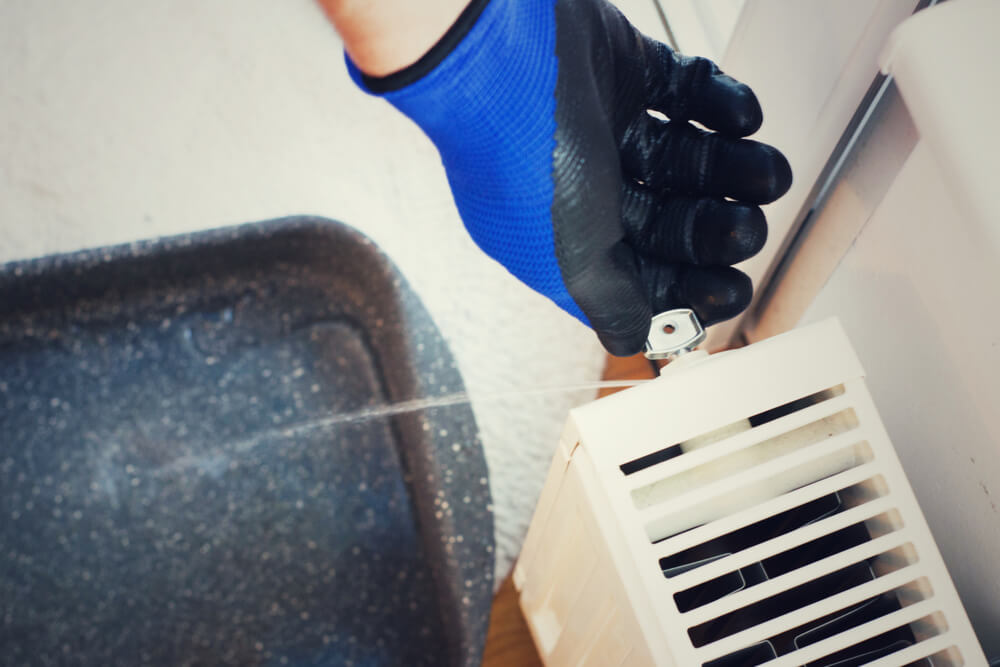
- Place a towel and bucket under the bleed valve.
- Insert the bleed key and slowly turn anticlockwise.
- Allow the air to escape; you will hear a hissing noise, and when water starts to come out, close the valve.
- Repeat on all your other radiators.
- Repressurise the boiler if it loses pressure when you bleed your radiators.
- Turn the heating back on and check to see if they’re heating up properly.
What order to bleed radiators
Always start with the radiator that is furthest from the boiler and work towards the boiler, as this one will likely contain the most air. Always bleed one radiator at a time to prevent air from escaping into the next one.
How often should you bleed radiators?
The best time to bleed your radiators is at the start of winter or when you first turn the heating on after the summer. When your heating is off over the summer, air can build up in the system, so checking when you first turn them on is a good idea.
At a minimum, repeat annually to ensure your heating is running efficiently. However, if you find cold spots at the top of your radiators throughout the winter, there’s no harm in bleeding them more frequently as needed.

What if bleeding the radiators doesn’t work?
If you have to bleed your radiators frequently or they aren’t heating up evenly, there could be underlying issues like a leak or dirt and rust buildup. Check around your boiler and underneath radiators for leaks, which could be causing the uneven heating.
If there isn’t a leak, you might need to flush the system to remove dirt or rust buildup stuck inside.
Radiators and radiator bleeding tools at Build & Plumb
You now have the tools and knowledge to bleed your radiators ready for winter. Remember that trapped air in radiators causes inefficient heating. You need to remove it to ensure they heat your home at its maximum efficiency, and you’re not paying extra on your energy bills to heat it inefficiently.
Unfortunately, some radiators will have dirt, rust, damage and blockages that you can’t shift by bleeding your radiators or flushing the system. In this case, the only option is to replace your radiators with the most efficient heating system or call a professional plumber. Shop radiators at Build & Plumb to heat your home efficiently this winter. You can also ensure you have all your radiator parts, accessories, valves and plumbing tools to carry your radiator installations and maintenance at Build & Plumb.
Related blogs:
Comments are closed here.