
The ultimate guide on how to clean a radiator
If you’ve just turned on your radiator for the winter and it’s making a funny smell or not working as efficiently as you hoped, it might be time for the annual radiator cleaning.
Radiators need cleaning regularly to prevent them from looking unsightly, to ensure they work properly, and to provide the right amount of heat to your home.
Over time, radiators can collect dirt, dust, and grime. Whether you want to save money on your energy bill, make your heating more efficient, provide consistent heating in every room, or maintain a healthy and hygienic environment for your family, follow these easy step-by-step instructions to keep your radiators working well and looking good.
Table of contents:
- How to clean a radiator from top to bottom
- How to clean a radiator with a top grill
- How to clean between radiator fins
- How to clean behind radiators
- How to clean inside a radiator

How to clean a radiator from top to bottom
If you just need to give the outside of your radiator a quick wipeover, follow these simple instructions.
You will need:
- A soft sponge or microfibre cloth
- Warm water
- Gentle soap or white vinegar
- A bucket
- A towel
- A radiator brush or a long-handled duster
- A vacuum with a brush attachment.
Steps:
- Turn off your central heating and allow the radiator to cool down to avoid burning yourself.
- Dust the radiator with your vacuum and brush attachment or thin nozzle. Alternatively, use the long-handled duster or radiator brush to remove dust from hard-to-reach places, such as between the convector fins.
- Mix your cleaning solution of warm water and mild soap or white vinegar in the bucket.
- Clean the radiator surface using a microfibre cloth or sponge. Pay attention to any stubborn dirt, grease or stains.
- Rinse and wipe the radiator with clean water to ensure you remove all soapy residue.
- Dry the radiator with a dry microfibre cloth to prevent watermarks or streaks. Ensure it is completely dry before turning the heat back on.
How to clean a radiator with a top grill
More recently, modern radiator designs have increasingly included side panels and top grills, called white panel radiators. These features make the radiators more visually appealing, helping them blend into the room better. They also help disguise the convector fins, giving them a cleaner, more streamlined look. These features are extremely useful for households with small children, as they prevent small objects from falling into the radiator and getting stuck or causing blockages.
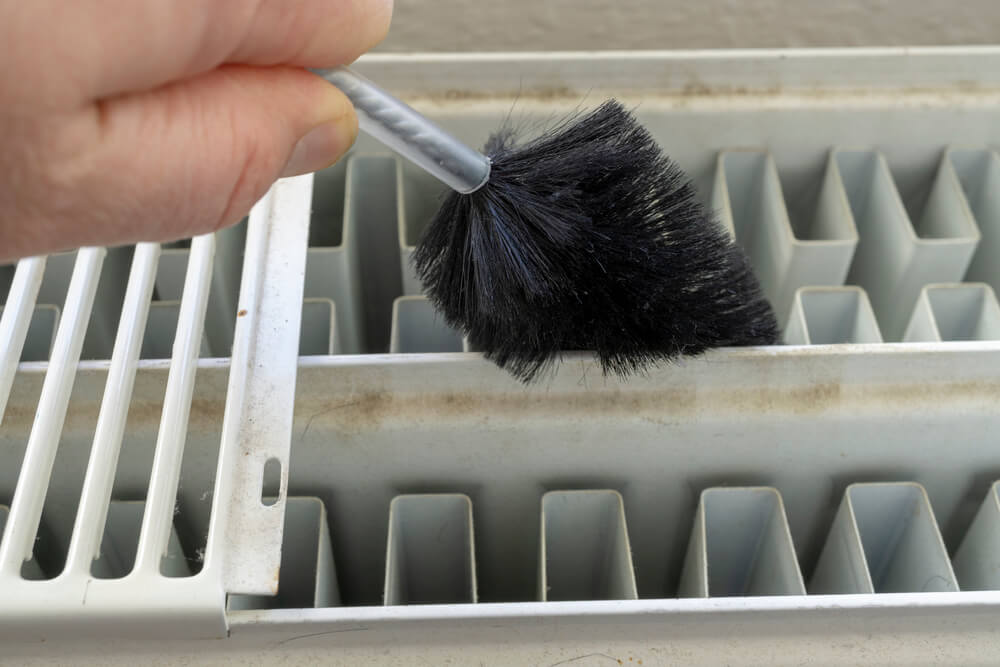
Although panel radiators have their uses, top grills make cleaning dust from the convector fins difficult. Hot radiators naturally collect dust, and the slots on the grill prevent you from cleaning the fins with a traditional duster or vacuum nozzle.
If you can’t easily remove the radiator grill to clean between the convector fins, you can use a radiator brush specially designed for cleaning those hard-to-reach places. (It’s sort of shaped like a giant pipe cleaner.)
- Its long and thin design allows you to reach between the narrow gaps of the top grill and between the convector fin.
- The soft and flexible bristles can dislodge dust, debris and cobwebs without causing damage to the delicate convector fins.
- Furthermore, the long handle allows you to control the brush while cleaning.
- The radiator brush is made from durable materials, so it can withstand frequent use and some brute force when you pull it back out of the convector fins and top grill.
How to clean between radiator fins
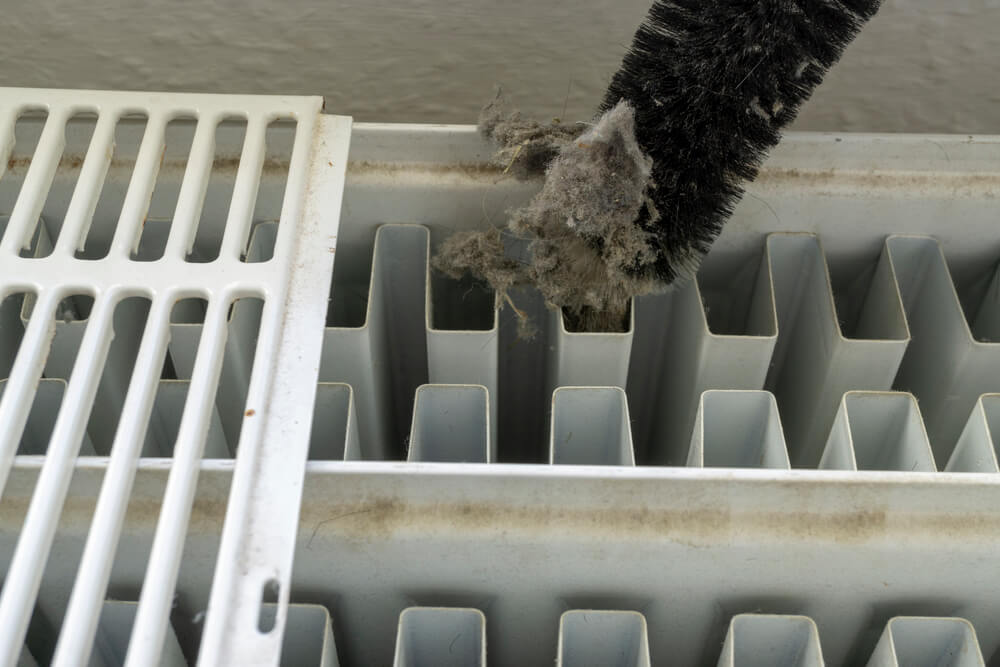
If a radiator has thin metal plates attached to the back or centre of your radiator, it is a convector-type radiator. These fins increase the radiator’s surface area, enhancing heat exchange and transfer throughout the room.
The fins are designed so that as they heat the air near them, it rises, drawing cool air from below in a process called convection, which distributes heat more evenly and efficiently throughout the room. However, they are a known dust trap, so regular cleaning is essential to keep them working efficiently and prevent them from smelling of burning dust.
The best thing to use to clean radiator fins is a long and thin radiator brush.
- Make sure the radiator has cooled down before you start.
- You may also be able to remove your top grill with a screwdriver or an easy pop-off mechanism. But if not, the radiator brush should still be able to access the fins.
- Brush the convector fins gently. Start from the top and work to the bottom, dislodging any dust, debris or pet hair. Be careful not to bend, scratch or damage the fins.
- Once the dust is clean, hoover the dust you’ve likely pushed to the floor under the radiator. Then, use the brush attachment to hoover up any dust or debris lingering in the convector fins.
How to clean behind radiators
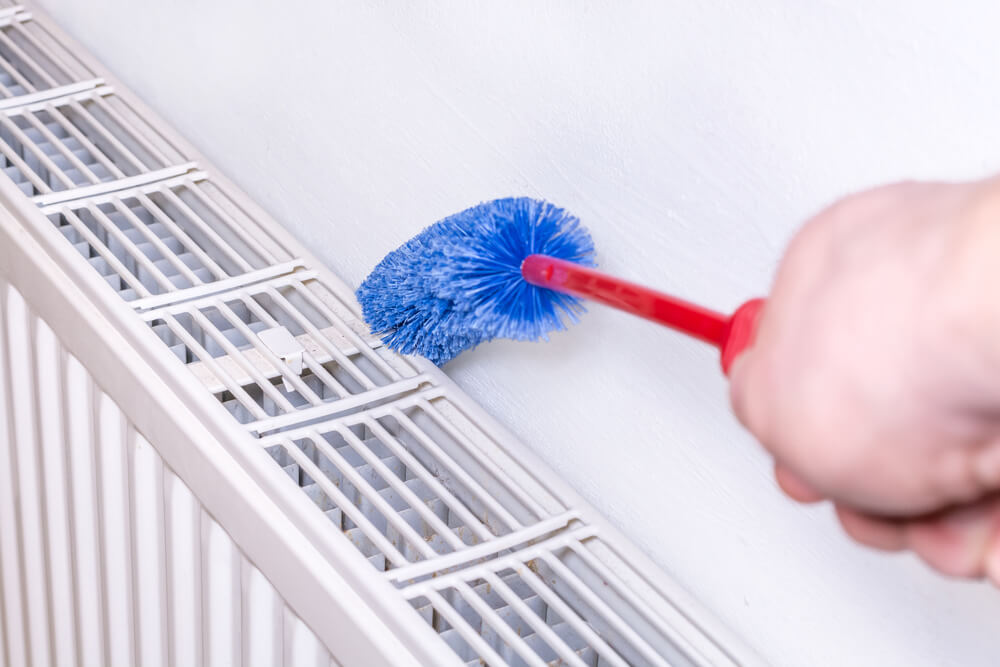
Because of the air circulation patterns behind your radiator, dust, dirt, and pet hair easily accumulate behind it. As warm air rises, airborne dust particles settle on the radiator. Radiators sometimes create static electricity, which also attracts dust particles. So, this area should be added to your cleaning list; getting a specifically designed brush will help make the job easier.
- Ensure your radiator is switched off and cool before cleaning behind it.
- First, use your vacuum cleaner to remove as much dust as possible from behind the radiator. Then, vacuum up any dust that drops on the floor. You can put down an old sheet or towel to prevent your floor from getting dirty.
- Use a radiator brush or a duster with a long handle to clean behind the radiator.
- You can also wipe the wall as dust, dirt and cobwebs could have dirtied it. Use your gentle, soapy, warm water solution and microfibre cloth to wipe the wall as much as possible. With the radiator attached to the wall, it will be hard to reach it fully, so just focus on the visible parts if you can.
- Use a dry microfibre cloth to dry the wall to prevent dust from sticking to wet patches.
How to clean inside a radiator
Cleaning the outside of your radiator is simple enough, but what happens when you need to clean the inside? If your central heating radiators are not running as efficiently or you can feel cold spots at the bottom, they may be full of debris, rust, or sludge. In this case, you will need to flush out your radiator.
Tools you will need:
- A bucket
- Old towels or rags
- An adjustable wrench or spanner
- Radiator bleed key
- A hose
- Screwdriver.
Steps:
- Turn off your heating system by switching off the boiler and letting the system cool to avoid burns.
- Prepare your area by placing towels around your radiator and a bucket beneath the valve to catch water. If your radiator has a cover, remove it for better access.
- Close the valves on both sides. The thermostatic valve on one side should be turned to the “off” position, and the lockshield valve on the other side may need to be closed with a spanner.
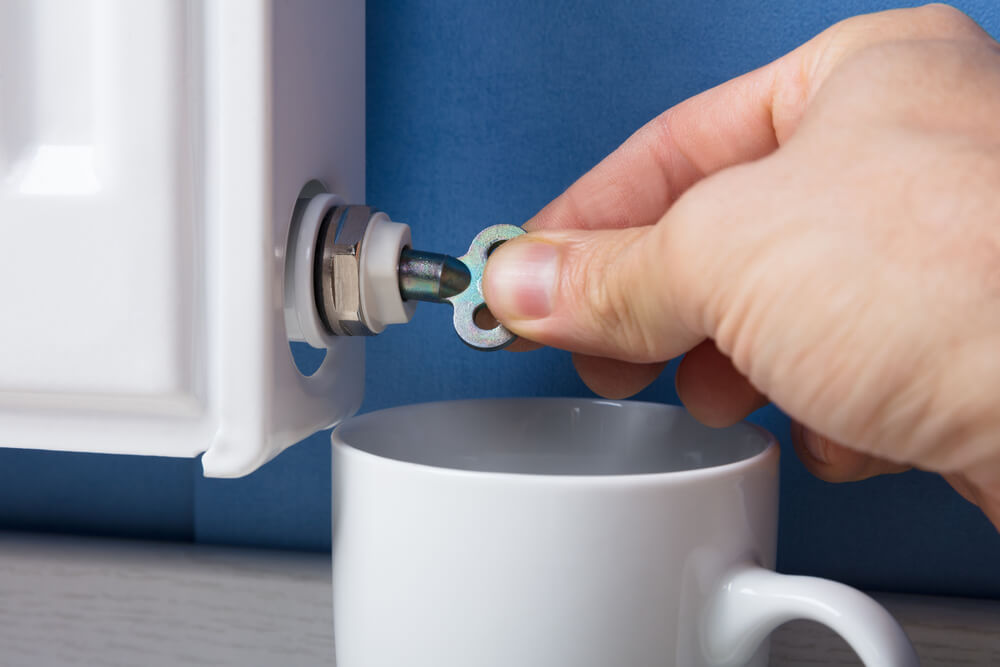
- Bleed the radiator using the bleed key at the top to release trapped air.
- Disconnect and drain the radiator by loosening both nuts on the valves with a spanner. Water will start to drain, so ensure your bucket is ready. Tilt the radiator to help empty the water.
- Flush the radiator by taking it outside, attaching a garden hose to one of the valve openings, and running water through it until it runs clear.
- Reattach the radiator to the valves and tighten the nuts securely. Ensure the bleed valve is closed before refilling.
- Refill and test. Open the valves and let the water fill the radiator. Release air using the bleed key until water flows steadily from the bleed valve. Lastly, turn the heating system back on and check for leaks and whether the radiator works more efficiently.
Repeat the process as needed. If the dirt and sludge are a symptom of a larger issue in your heating system or multiple radiators are sluggish, we recommend hiring a professional to conduct a system-wide power flush. You can also add an inhibitor to prevent future dirt build-up.
Radiators at Build & Plumb
We cannot stress enough that dust build-up on the outside and rust and sludge on the inside of your radiators impact your energy usage and heating bill. A build-up of dust on your radiators or debris inside will prevent them from heating your rooms efficiently, so regular cleaning will help you heat your home faster and help you save money on your household bills.
Sometimes, a radiator is nearing the end of its life, and no cleaning or flushing can make it more efficient. That’s when you know it’s time to update your radiators. At Build & Plumb, you can upgrade your radiators to more energy-efficient models from our radiator collection.
Related blogs:
Comments are closed here.